
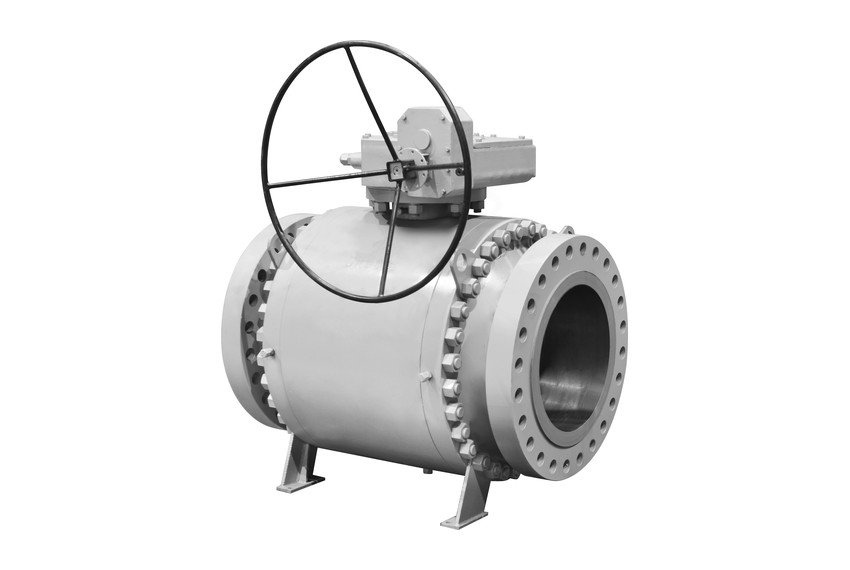
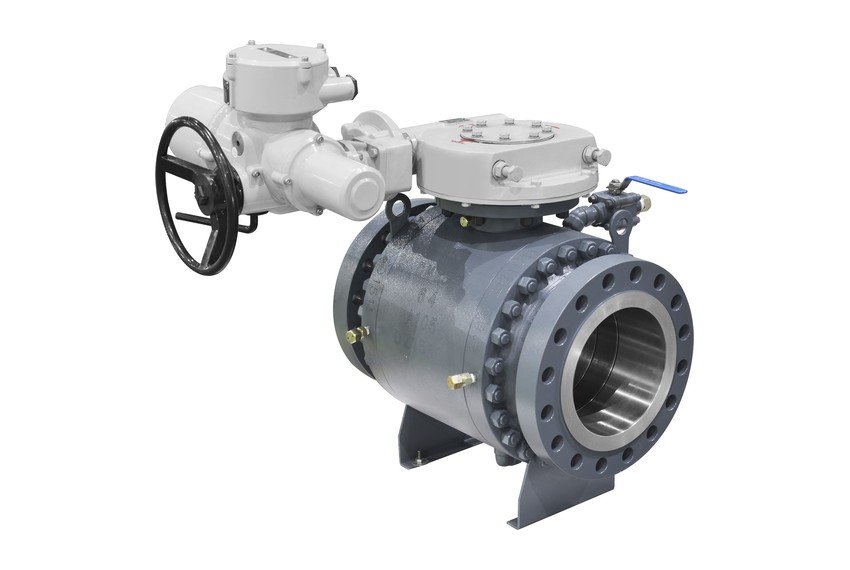
TRUNNION SOFT SEALING BALL VALVE CLASS 150-1500, FULL BORE BODY
SOFT SEALING BALL VALVES (PTFE/RPTFE/NYLON/DEVLON/PPR/PEEK)
KITZ, KAIRUITE
Range: DN50-600
Pressure: CLASS 150 TO 1500
Temperature: -46-200℃
FEATURES
- Reinforced PTFE
- Double lock and bleed function
- Low torque
Fire-safe layout
(1) Prevention of internal leaks
When resistant sealing materials are damaged or destroyed by a fire in a plant, the edges of and seat retainers Downstream metal tubes preloaded by seat springs contact the ball to close the fluid line and minimize internal leakage through the valve orifice. And KITZ’s original design flexible graphite seat retainer packing rings prevent fluid leakage between valve covers and seat retainers during and after a plant fire.
(2) External Leak Prevention
External leakage from the valve stem area is prevented by double sealing with flexible graphite gland packing rings and O-rings. Leaks through the valve body gasket are protected by flexible graphite gaskets. Even after a fire has damaged the O-rings, the flexible graphite gland packing rings and gaskets remain intact to prevent external fluid leakage.
Tight Shut-off Sealing Mechanism
The resilient seat design adequately maintains each of the upstream and downstream ball seats in contact with the ball by means of repulsing force of seat springs inserted behind the seat retainers. Line fluid pressure also helps this contact method. This sealing mechanism features unfailing thru-the-bore sealing performance of upstream and downstream side ball seats at the same time.
Double Block and Bleed Function
Ball seats independently shut off the line fluid on the upstream and downstream side of the ball. The valve bore and the body cavity are isolated from each other when the valve is fully open or closed. Under this condition, the cavity pressure can be discharged with a vent valve and a drain plug. The vent valve is equipped with a blowout-proof bleeder for safe discharge. Relieving the cavity pressure with a vent valve is recommended for safe draining.
Blowout–proof Ball Seat Assembly
As illustrated below, ball seats are threaded into unthreaded back of seat retainers to finally reach to inner walls and lower shoulders of the seat retainers for tightly sealing surface-to-surface contact. This unique design provides easy maintenance and blowout-proof seat assembly when ball seats are excessively loaded by back pressure due to incidental cavity pressure rise.
Antistatic Design
Spring loaded balls assembled between the stem and the bonnet and between the stem and the ball permits electric conductivity through all metallic valve components.
Cavity Pressure Relief
In case of incidental rise of servicing or ambient temperature, liquefied gas or highly volatile liquid trapped within the body cavity may vaporize, and cause an excessive rise in the cavity pressure. For safety consideration, when the cavity pressure exceeds the line pressure, either one of the ball seats will move slightly away from the ball surface together with seat retainers to relieve the excessive cavity pressure into the valve bore.
Low Emission Guaranteed Design
The fugitive emission suppressing design for both resilient and metal seated valves are certified to ISO 15848 tightness class “B” (Lower than 10-4 mg·s-1·m-1 for stem leakage and lower than 50 ppmv for body leakage). This verifies the outstanding low emission performance of the whole sealing mechanism of the valve.
Options
(1) Emergency Seal Restoration: For accidental leakage from ball seats or stem sealing area, a sealant supply mechanism may be provided as an option. Should sealing parts be damaged or decomposed by a fire or other accidental causes, leakage can be temporarily prevented or reduced by sealant injection into this mechanism.
(2) Special Shell and Trim Materials
(3) Special Sealing Component Materials
(4) Butt-weld Piping Connection
(5) Pipe Pups Welded to Valve Ends
(6) DIB: Double Isolation and Bleed (Double Seal)
(7) Stem Extension
(8) Overlay for Bore and Cavity
(9) Actuation (Pneumatic and Electric)
| Service | Oil, Natural gas, Water and Chemical Transmission Pipeline application |
| Design Body | One piece, Two pieces, Three pieces |
| Bore | Full bore or Reduce bore |
| Bonnet Design | End entry, Top entry |
| Ball Design | Trunnion mounted ball |
| DBB/DIB Design | Yes |
| Size | 1 1/2”-64” |
| Pressure | 150Lb-2500Lb |
| Design temperature | -46-200℃ |
| Main materials | CS/SS/Duplex stainless steel/Bronze/Inconel/Titanium alloy steel |
| Seat sealing type | PTFE/RPTFE/NYLON/DEVLON/PPR/PEEK |
| Operation | Manual, Electric, Pneumatic, Gas over oil, Electro-hydraulic actuator.(Rotork, Biffi, DVG, etc.) |
| Design Standard | API608/API6D/AWWA/BS5351/ISO17292/DIN/GB/GOST |
| Face to face | ASME B16.10/ API6D/DIN |
| Ends | RF/RTJ to ASME B16.5/ASME B16.47, BW to ASME B16.25 |
| Pressure and Temperature Design | ASME B16.34 |
| Test standard | API6D/API598, ISO5208 |
| Basic design: API 6D / ISO 14313 | Dimensions: F – F: API 6D / ASME B16.10 |
| End connection: ASME B16.5 | Hole diameter: API 6D / ISO 14313 |
| Wall thickness: ASME B16.34 |
| Pressure rating: ASME Class 150 to 1500 | Nominal size: NPS 2 to NPS 24 (DN 50 to DN 600) |
| Shell materials: | Carbon steel, Alloy steel, Austenitic stainless steel, Duplex stainless steel, High-alloy steel, Nickel-based alloy |
| Ball seat materials: | RPTFE (reinforced PTFE), modified PTFE, RNylon (reinforced Nylon), DEVLON V®, PEEK |
| Fugitive emission: ISO 15848-1 BH CO1 | Fire test: API 607/API 6FA/ISO 10497 |
| PED: 2014/68/EU | ATEX: 2014/34/EU |
| SIL: IEC 61508 (SIL 2) |